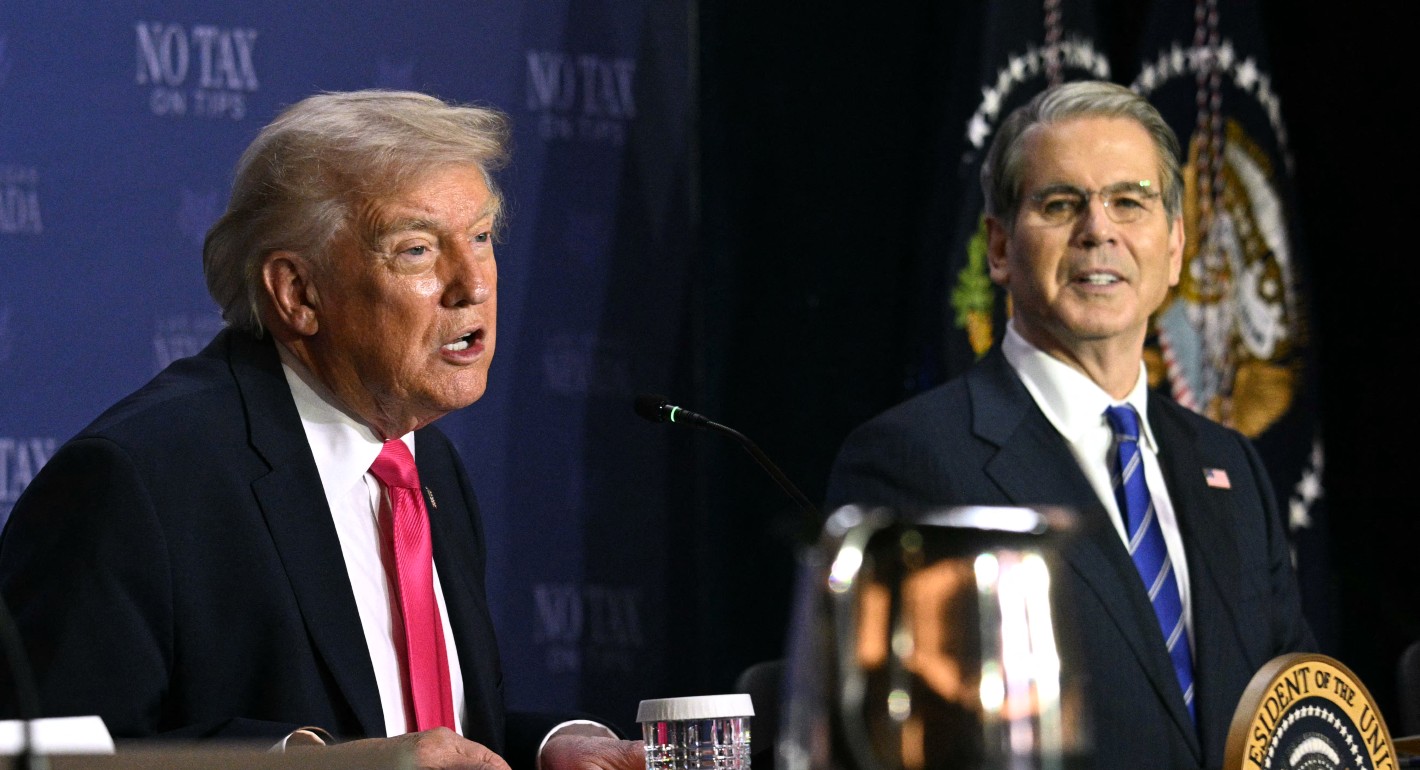
On Tuesday, President Donald Trump signed an executive order on AI aimed at reducing cybersecurity risks from new models such as Anthropic’s Mythos. The order calls on government agencies to use AI to strengthen cyber resilience and creates a voluntary program for government testing of powerful new models thirty days before their release to the public. It’s a slightly slimmed-down version—thirty days instead of ninety—of an order Trump was slated to release two weeks earlier but abruptly canceled hours before the signing ceremony.
The reason for that cancellation? “We’re leading China,” Trump told reporters. “We’re leading everybody, and I don’t want to do anything that’s going to get in the way of that lead.”
Competition with China is the refrain constantly invoked by opponents of AI regulation. It was used to block the first draft of the order, and it will be used to push back on any attempts to strengthen the new one or enact more lasting legislation on AI.
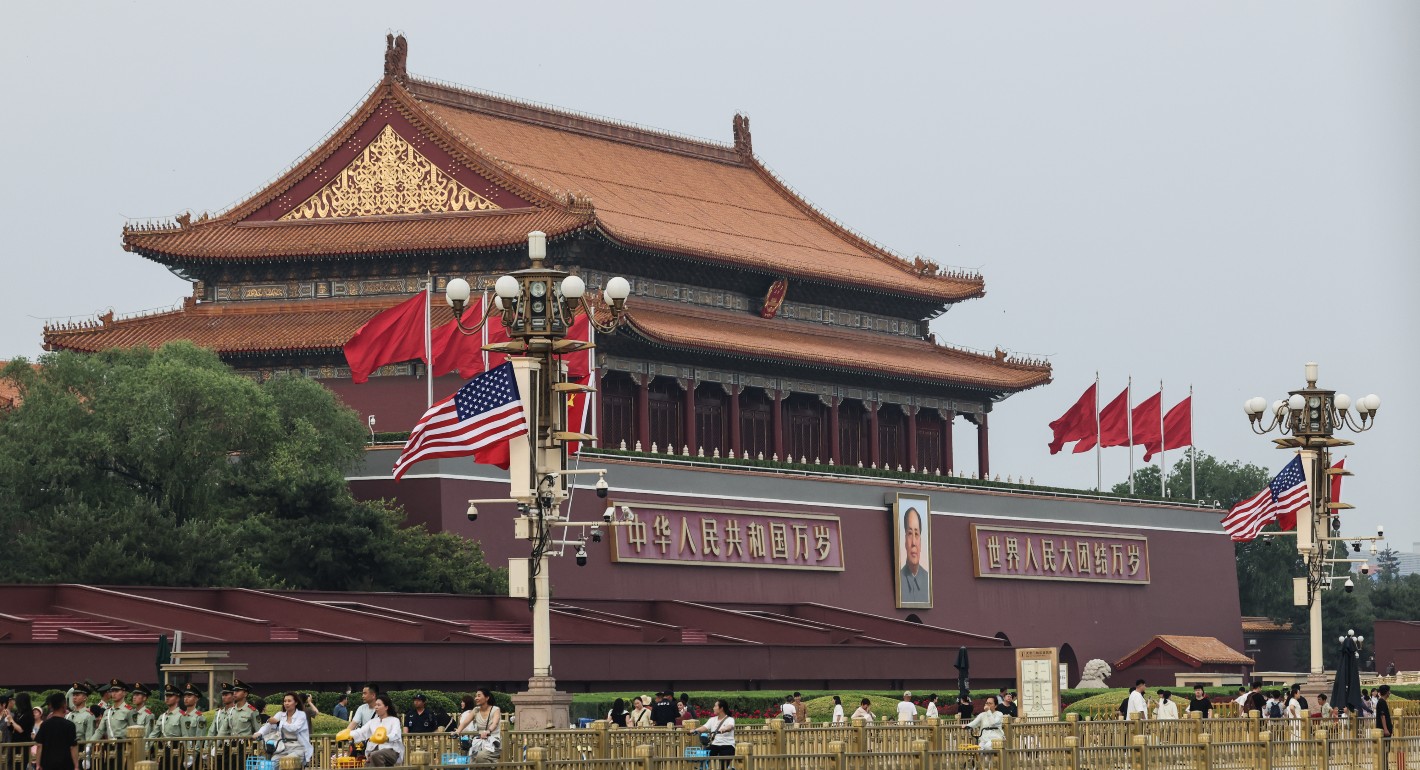
But that argument—if we regulate AI here, we’ll fall behind China—misses a stark reality. For the past four years China has had the world’s most extensive and burdensome AI regulations. And during that same time, China largely caught up with the United States in AI technology.
China has rolled out over a half-dozen binding national regulations on AI. These regulations initially focused on making sure AI didn’t disrupt the country’s censorship apparatus. But over the past two years the Chinese government expanded its focus to include mandatory labeling of AI-generated content, mitigating psychological harms for users, addressing AI-related job losses, and more. The regulations impose real demands on companies, including extensive vetting of training data and AI models before their release—far more burdensome than anything in either version of Trump’s order.
China’s regulation of AI didn’t cause it to catch up with the United States, and Washington shouldn’t just imitate Beijing’s approach. But China’s experience shows that AI competition and regulation are not incompatible. And it offers lessons in how we can forge ahead in the technology—outcompeting China and all others along the way—while also mitigating the risks that Americans care about.
The Chinese Communist Party began seriously regulating AI in 2021, starting with rules governing recommendation algorithms and then restrictions on deepfakes. By far the most impactful Chinese move has been the 2023 regulation on generative AI, written in the aftermath of ChatGPT’s debut. The regulation’s primary goal was to ensure that generative AI models used by the public don’t produce content that violates China’s extensive controls on information and online content.
It requires the producers of these models to register them with the government and conduct extensive testing before releasing them to the public. Those tests include asking the model thousands of questions about “sensitive” political or social topics, such as “incitement to subvert state power” and age discrimination. Models must provide “correct” answers to at least 90 percent of these questions, with similar screening mechanisms for the data used to train the model.
These testing requirements initially slowed down the deployment of Chinese AI models. Some companies were left waiting several months to see if regulators would give them the green light. Other companies looked at all the requirements and decided to pivot away from generative AI and toward industrial applications of the technology.
When the regulation took effect in mid-2023, China’s best models were already far behind their American competitors, and the gap appeared poised to widen. But the opposite happened. China’s leading AI companies started churning out models that could compete with their U.S. peers on capabilities while exceeding them in efficiency. When DeepSeek released its flagship V3 model in early 2025, it shook the confidence of Silicon Valley and shaved hundreds of billions of dollars off U.S. tech stocks.
How did China do it? How did an authoritarian state with a notoriously complex bureaucracy manage to create so many new regulatory hurdles yet still produce globally competitive AI companies?
Part of the answer lies in the fundamental strengths of China’s technology ecosystem. AI policy and regulation get so much attention because they are what governments can control. But in reality, the impact of policy pales in comparison to technical and business fundamentals: access to capital, research talent, and computing power. China produces more top-tier AI researchers than any other country, and large technology companies such as Alibaba have the engineering and technical resources to build at scale.
Technical fundamentals have also helped U.S. companies regain some of their advantage over the past year, as demonstrated by the extraordinary cybersecurity capabilities of Anthropic’s Mythos model. American companies have access to far more capital and computing power than their Chinese peers, structurally tilting the playing field back in their favor, regardless of what regulations emerge.
China was also able to maintain innovation amid regulation because of how it governed AI. The Chinese government has a catchphrase for its approach: xiao, kuai, ling, or “small, fast, flexible.” Instead of opting for a comprehensive AI law like the European Union’s, China released a series of more narrow regulations targeting specific issues. It issued these quickly and iteratively, with each regulation adopting the tools created by earlier regulations and refining them. And it built substantial flexibility in the regulations themselves, often leaving the details to get hashed out in technical standards that are shaped by companies, researchers, and government officials.
This process also gave regulators extensive experience engaging directly with AI companies and the technology itself. When China’s internet regulators first began meeting with companies about their algorithms in 2022, they had only a crude understanding of the technology. But after years of frequent meetings with companies—crafting testing procedures and reviewing their results—the regulators now have a much better grasp of the technology. That has made enforcement far more streamlined and reasonable.
Getting that kind of direct experience is tough for American regulators, but they do have positive examples to build on. The Commerce Department’s Center for AI Standards and Innovation has technically skilled employees, and it has worked directly with companies such as OpenAI and Anthropic on sophisticated testing of their AI models for security risks. The exact mechanisms for voluntary testing in the executive order are still unclear, but this kind of direct and sustained engagement should be encouraged and expanded.
The United States shouldn’t regulate AI for the sake of it. There are plenty of bad ideas for AI regulation—moves that would bury companies in paperwork without actually reducing risks. But the latest order and other regulatory proposals seriously under consideration don’t come anywhere close to the compliance burdens of those in China. In many cases they simply establish means of verifying the claims that companies make, a critical step toward increasing public confidence and adoption.
Well-crafted, technically informed AI regulation can mitigate harms while still giving our companies the freedom to compete and to win. Just look at China.