India’s relations with Europe are often viewed through the lens of Brussels, Paris, Berlin, or London. But in recent years, India has also been deepening its ties with another important set of partners: the Nordic countries.
Recently, Prime Minister Narendra Modi traveled to Oslo for the third India-Nordic Summit, bringing together India and the five Nordic countries—Norway, Sweden, Finland, Iceland, and Denmark.
The agenda for the six countries was wide-ranging, covering trade, investment, green technology, maritime cooperation, the Arctic, and the Indo-Pacific.
The visit also marked the first official trip by an Indian prime minister to Norway in more than four decades. As a result of the summit, Norway and India have elevated their bilateral relationship with new agreements on climate, technology, science, and the blue economy.
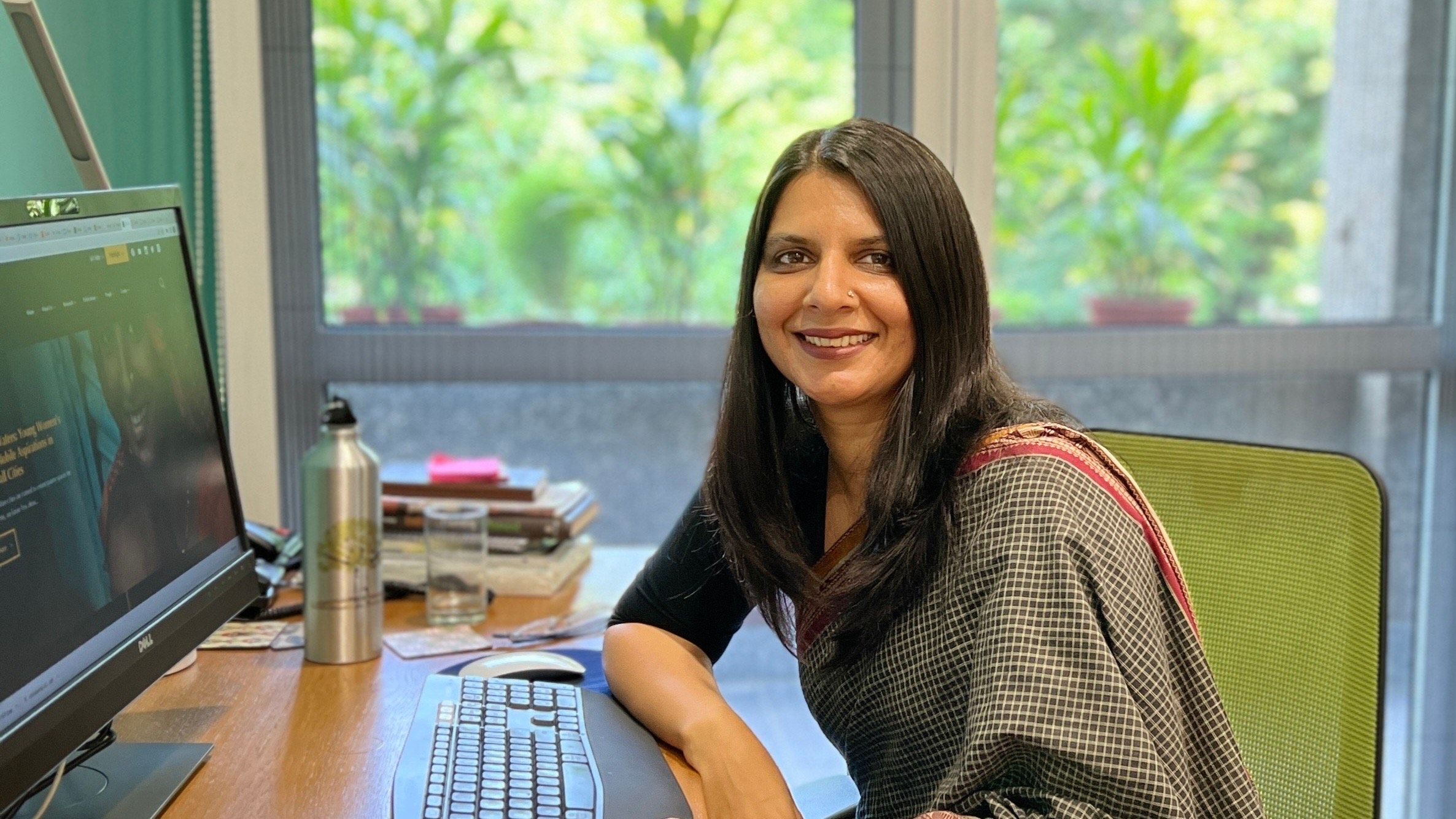
To discuss what all of this means for India, Norway, and the changing global order, Milan is joined this week by May-Elin Stener, who serves as Ambassador of Norway to India, Sri Lanka, Bhutan and the Maldives.
Prior to taking up this position, Ambassador Stener was the Deputy Director General of the Regional department in the foreign ministry. She has served as Norway’s Deputy Permanent Representative to the United Nations in New York as well as Deputy Head of the Norwegian Embassy in Pretoria, South Africa. She has been a member of the Norwegian Foreign Service since 1995.
Milan and Ambassador Stener discuss the outcomes of the India-Nordic summit, the Trade and Economic Partnership Agreement (TEPA), and the green technology partnership Norway envisions with India. Plus, the two discussed linkages between the Arctic and the Indo-Pacific and the controversy over a Norwegian journalist’s questioning of Indian officials in Oslo.
Episode notes:
- Ministry of External Affairs, Government of India, “India-Norway Joint Statement,” May 18, 2026.
- Government of Sweden, “Joint Statement: 3rd India-Nordic Summit, Oslo, 19 May 2026,” May 19, 2026.
- Priyanka Shankar, “India-Nordic summit: Why is Modi wooing Northern Europe?” Al Jazeera, May 19, 2026.
- “The India-Nordic Summit: What It Is and What Has Now Been Set in Motion,” India’s World, May 20, 2026.
- Suhasini Haidar, “Commitment to democracy makes India, Nordic nations natural partners: Modi,” Hindu, May 20, 2026.
Transcript
Note: this is an AI-generated transcript and may contain errors
Milan Vaishnav Welcome to Grand Tamasha, a co-production of the Carnegie Endowment for International Peace and the Hindustan Times. I'm your host, Milan Vaishnav. India's relations with Europe are often viewed through the lens of Brussels, Paris, Berlin, or London. But in recent years, India has also been deepening its ties with another important set of partners, the Nordic countries. Recently, Prime Minister Narendra Modi traveled to Oslo for the third Indian Nordic Summit, bringing together India and the five Nordic countries, Norway, Sweden, Finland, Iceland, and Denmark. The agenda for the six countries was wide-ranging, covering trade, investment, green technology, maritime cooperation, the Arctic, and the Indo-Pacific. The visit also marks the first official trip by an Indian Prime Minister to Norway in more than 40 years. As a result of the summit, Norway and India have elevated their bilateral relationship with new agreements on climate, tech, science, and the blue economy. To discuss what all of this means for India, Norway, and the change in global order, I'm joined today by May-Elin Stener, who serves as the ambassador of Norway to India, Sri Lanka, Bhutan, and the Maldives. Prior to taking up this position, Ambassador Stener was the deputy director general of the regional department in the foreign ministry. She has served previously as Norway's deputy permanent representative to the UN in New York, as well as deputy head of the Norwegian embassy in Pretoria, South Africa. She has been a member of the Norwegian Foreign Service since 1995. I am pleased to welcome the ambassador to the show for the very first time. Ambassador, thanks so much for coming on.
Ambassador May-Elin Stener Well, thank you so much for having me. I'm really excited to be on this show and talk about all these issues that you are mentioning.
Milan Vaishnav That's great. Well, let me start maybe just with a little bit of context for our listeners who might not be as familiar with this relationship as others. You know, India and the five Nordic countries I mentioned earlier, Norway, Sweden, Finland, Iceland, and Denmark, recently got together in Oslo for the third edition of the India-Nordic Summit. So, for people who are maybe unfamiliar with this particular format, what is the India Nordic Summit and why does it matter?
Ambassador Stener Well, [as] you are saying it was the third India-Nordic summit. The first took place in 2018 in Stockholm and the second in Copenhagen in 2022. And this is a forum where the prime ministers of the five Nordic countries can sit together and discuss issues, the wide-ranging ones that you mentioned, with the leader of the world's most popular country, namely India. And since the last Nordic-India Summit, India has become the most populous country. So, it has become more important, and a lot has changed since 2022 in the world. So, it was a really significant and important meeting for all of the five Nordic countries. And I would also like to then say, you know, why is it important and just to quote the leaders, what they said in their joint statement is that we come together, we have shared values of democracy, freedom, human rights, pluralism, international peace and security. We all want world based on international law and respect for the United Nations Charter. And that's quite important in this volatile world that we see today.
Milan Vaishnav I want to just spend a second talking about the significance of this visit to Oslo. I mean, Prime Minister Modi's visit was the first official visit by an Indian prime minister to Norway [in] I think it was 43 years, if I read correctly. I wonder if you could just pause for a second and tell me, from Oslo's perspective, why was this such a significant moment and why Norway really seemed to roll out the red carpet for the prime minister.
Ambassador Stener Well, of course, we will always roll out red carpet for the Indian Prime Minister, and as I said, particularly now that he is the Prime Minister of the world's most populous country. It was only the third time that an Indian Prime Minster visits Oslo and Norway. And as you are saying, the last time was in 1983 when Indira Gandhi visited Norway. So, we really view this visit as historic, and it's for us really, really good that he came. And since India has now become so important, we've been talking about the population, but also in terms of the economy, the economy of India has grown so much the last 10 years. It's now the fourth biggest economy in the world, and it's the fastest growing economy of the major ones. So, we really see India as more and more important, geopolitically and economic partner for Norway. So that's why we were very excited and that's we rolled out the red carpet.
Milan Vaishnav I want to get to some of the kind of animating issues, I think, both that affect this grouping as well as affect Norway. I think one of the ones that comes most immediately to mind is the question of trade. And in 2024, India and the four EFTA countries, as they're known, Iceland, Liechtenstein, Norway and Switzerland, signed something called a Trade and Economic Partnership Agreement, or TEPA, and this was something that was very long in the making. I think negotiations for this agreement started like in 2008. There were more than 20 rounds of discussions back and forth before this agreement was finally concluded. Now that TEPAs have entered into force as of 2025, what does Norway hope this new accord will unlock in terms of its relationship with India?
Ambassador Stener Well, it's an important agreement, as you say, and we negotiated it for a long time. But it was also actually the first free trade agreement that India entered into with a group of European countries. Since then, we have seen the agreement with the UK and also the FTA with the European Union has been signed. But this was the first, and it is now the first to have entered into force. For us it's really very important, as I have already said, with the scale of India, the technological expertise and the growing international influence, it's for sure that this is very important for us and for Norway.
Milan Vaishnav What are the domains or sectors that are the most exciting or that seem the most promising from a Norwegian perspective in terms of trying to grow this bilateral relationship on the trade and economic side?
Ambassador Stener So, for Norway, this trade and economic partnership agreement really opens up new opportunities. In the last 10 years, the trade with India and between India and Norway has doubled. In the past 10 years also, the interest from Norwegian companies in terms of numbers has doubled, but still the trade is quite small. But we really think that it will increase with this treaty and that it will double again in the next 10 years, if not double several times in the next 10 years. And the sectors that are very important for us, where Norway is big—Norway has a much smaller population than India, but we are an energy superpower. We are a big energy exporter, and we are also transitioning our energy into green energy. And also, Norway actually has the second biggest coastline in the world. So, our coastline is bigger than India's. But India and Norway are both big maritime nations. So that is also a sector where we see great potential, where there is already a lot of trading and a lot of cooperation, but there is more to come.
Milan Vaishnav I mean, I should just mention for our listeners, who might not be aware, I think Norway has a population of around 6 million people, so we're talking about a relatively small country in population terms, but you raise something which I had not realized, which makes sense when you think about a map of having one of the longest coastlines in the world and coastline that in fact is longer than even India's. You know, you mentioned something about Norwegian investment, and this was, I think, if you look at the news stories or the coverage of the TEPA, you know, I think one of the headline commitments there was this EFTA pledge, the pledge amongst these four countries to push at least $100 billion in new investment in India. That could create up to one million jobs. Now, I realize that the agreement was negotiated in 2024. I think it was formally ratified in 2025. We're talking on May 28, 2026. Not a lot of time has passed, but what progress are you and some of your partners able to see in terms of investment coming into India from these four EFTA countries?
Ambassador Stener So, you know, this is what is special about this treaty, is this investment chapter. Because all the free trade agreements are about trade, but this is about investment also. I often get the question around here in India about the Norwegian Sovereign Wealth Fund, and should they not invest more in India? And they are investing more in India and the investments are growing with the growth of the Indian economy. But this is portfolio investments and it's not foreign direct investment. That's meaning investments by private sector companies. And this is what the investment chapter in the Trade and Economic Partnership Agreement is about. We need private sector to invest more in India. And as you are saying, we are still early days. We haven't seen so many concrete investments coming out of the treaty yet, but they will come. And as an ambassador to India, as an embassy, we are working very hard to help promote India in Norway. To Norwegian companies and help explore where are the opportunities. A month ago, I traveled to Hyderabad and to Andhra Pradesh to Visakhapatnam. And there, we really saw the vibrancy of India, particularly in Hyderabad. It's really happening place for those listeners who haven't been there for a while. You can almost see the growth happening as you're driving along the streets. And this is a city where there hasn't been a lot of Norwegian investments yet, so we were trying to explore where are the opportunities for Norwegian companies here. This is what we will also bring back to Norway and we will bring Norwegian companies to Hyderabad to see that. Also in Visakhapatnam, it's a port city, already quite a few Norwegian investments there Happy Hindustan. Shipyard and also at the port there because we are, as we have spoken about, a great maritime nation and we have companies who have been cooperating with the shipyard and the port in Virsakapatnam and there will be more investments to come there as well. So these are just some examples of opportunities. That we are looking to promote for Norwegian companies. And I'm quite confident that once they come also and see they will also want to invest there, they will want to be part of that future that is really growing there. And it's an optimism that you don't really see almost anywhere else in the world these days.
Milan Vaishnav I want to ask you about the summit joint statement that came out of this meeting with the Nordic countries. It says that the India-Nordic relationship is going to be elevated to, quote, a trusted green technology and innovation strategic partnership. Now that sounds very fancy. It sounds very ambitious, but I'm wondering if you could kind of explain to us kind in layperson's terms, you know. What does a green technology and innovation strategic partnership actually mean in practical terms?
Ambassador Stener Well, I think it means a lot and to undertake to explain it, I will try, but it means of course that all the six countries that were participating in this India-Nordic summit, we have shared values as I also said in the beginning and those shared values are also of sustainability and a cleaner future. And the climate that we can all live with. And India as the most populous country, one sixth of the world, if we don't find sustainable solutions for India, the world has lost this. So that's why it's really important to have this green strategic partnership with India. Just to give some examples, and I will give them from the Norwegian corporation. To just say what it is all about. We have Norwegian and Indian researchers, scientists, who have worked for a few years to try and find solutions for sustainable cooling, which means that your air condition is not bad for the climate. And those sustainable solutions for cooling, they have managed to develop them. They are now being used in India already. I've seen them myself on the fish factory down in Kotshin in Kerala. And if we can have more solutions like that, I think it's really important. It's good. It's also about, you know, how some of the technologies being developed in a small country like Norway will... Can be scaled up in India and can matter much more than they can if they are only in Norway. We also have a company called Kambi. They have developed how to convert sludge into gas here in India. And they've set up systems for that in Mumbai. They are now looking to set up systems for also in other parts of India and working together with Indian partners on that. So that also means a lot to get all, with all that dirty water around, we can actually use it for something that is good, that is sustainable and that is good for the future rather than the other way around.
[…]
Milan Vaishnav I mean, you know, on the one hand, there are these conversations happening about green technology, the blue economy, sustainable growth, but the summit itself was taking place against a very difficult geopolitical backdrop, which has to do principally with the continuing Iran conflict and uncertainty over energy flows. Mainly oil and gas, fuel and fertilizer, and the broader instability in West Asia. And I'm wondering, to what extent, from your perspective, did these developments happening in what India calls West Asia, what a lot of the world calls the Middle East, how did these development shape the conversations you had in Oslo, especially given, number one, India's dependence on oil imports, and number two, You know, Norway's own role, as you said earlier, is both a major energy provider as well as a maritime player.
Ambassador Stener Yeah, you know, only after I came to India almost three years ago, did I understand the term West Asia, but it makes perfectly sense to me to see it from India. Of course, it's West Asia. So for that we call it the Middle East, I understand that that seems a bit strange from here. But that was just a side comment, of course, since you mentioned it. In this world of turmoil and in this difficult world of conflicts and more and more conflicts taking place. For Norway and for the Nordic countries, it is really important to discuss these issues with India. We don't see eye-to-eye on all issues. For example, with the full-scale invasion of Ukraine, we have the first world conquest in Europe since the second world war. And that is close to our heart. It's a little further away from India. West Asia, Middle East. Is closer to India, it's between our region, so much more important to discuss. And I think what we share, all these five countries, that we don't really think there is an alternative to an international order based on international law. We see it, for example, now when the Hormuz Strait has been closed. We all agree that the law of the sea must apply, and it must be opened up. So these issues are important for us to discuss with India, and I also really believe that together we can find solutions with India if we continue discussing that. It doesn't mean that we all always agree, because we have very different standpoints, but we have a good discussion. And I think we will also be able to to look at solutions together for for the world together We are we are important players all of us
Milan Vaishnav I want to maybe shift a little bit to a completely different region, which is the Indo-Pacific and the Arctic, and two different regions. The joint statement refers to the growing linkages between the Arctic and the Indo Pacific, and I think many of our listeners will look on a map and say that these are pretty distinct geographies. I'm wondering, how does Norway understand the connection between these two, and kind of where does India fit in? To Norway's thinking about the Arctic, which is very much in your backyard and quite distant from India's own.
Ambassador Stener Well, three years ago, in June 2023, I was newly appointed as Norway's ambassador to India and I was very lucky because an Indian minister visited Norway and he also visited the Arctic island of Svalbard. I went with him to visit the island. And we also went to visit the Indian researchers that sit there in a very small place called Ny Aalesund, but they are doing extremely important research in this area. And I learned from one of these researchers how the melting of the ice in the Arctic is affecting the monsoon in India. It really struck me that these things are really closely connected even though the regions are far apart. It is important that we discuss, it's important that find solutions and it's important that allow and make place for Indian researchers also in Svalbard where we have the Norwegian research station. And that we cooperate to see these connections, and therefore also we can solve them. So I think mostly it's really important for the climate and the solutions for combating climate change, but of course also for a variety of different reasons.
Milan Vaishnav With regards to the bilateral relationship, you know, there was this flurry of signings in terms of various agreements, I think 12 agreements in total during Modi's visit, ranging from agreements on climate, to tech, maritime, scientific collaboration, something you just talked about. Obviously, we could talk about each of these, but in the interest of time, as you look across this dozen or so agreements that Norway and India finalized, What are some of the key highlights or things that you think our listeners should know about these new accords?
Ambassador Stener Well, actually there were 30 agreements signed.
Milan Vaishnav Excuse me, 30? Wow, I was off by orders of magnitude here.
Ambassador Stener So that also comes back to saying how important and historic this visit was for us in Norway. And I really, as you say, I can't say that one agreement is more important than the other. I can only say that there were agreements signed in a lot of sectors, technology, partnerships. Climate cooperation, I've mentioned some examples already. Maritime collaboration, scientific research, and all these areas are quite deeply interconnected and these sectors reinforce each other. That's why I think all these 30 agreements, some of them government to government, most of them business to business, they create an integrated framework for the long term. Strategic cooperation that Norway will have with India, or that Norway and India will have together. So that's where we really bring in these expertise that we have in green technology, in maritime innovation, in sustainability. And we bring this to India. And there is so much talent in India. This is really where we can scale it up. We're all these agreements together, I think they are even greater than the sum of their parts.
Milan Vaishnav I don't know if you want to elaborate, but I think one of the things that I find so interesting is Norway on the one hand is a major energy producer. It's also recognized, I think, as a global leader when it comes to the green transition. India obviously is a situation where they're growing rapidly. They would like to have greener growth. They'd like to decarbonize. They're still heavily reliant, obviously, on fossil fuels, but are making changes to try to, you know, switch its kind of energy mix. As you kind of look at the landscape, where do you think the strongest overlaps are between what India needs developmentally at home and what Norway's strengths are in the kind of domain of energy and green technology?
Ambassador Stener Well, we have a great respect for the development in India and that this big country and with this rapid economic growth needs energy and needs to develop different sources of energy. So we are very pleased that we are able to contribute in some of these areas as we are saying. Just to mention one example, last year in July, we opened up a project in Norway called the Northern Lights. This is a carbon capture and storage facility underwater and part of a bigger project called longship project where they actually carry cement from one part of Norway to the other part of Norway and then store the CO2 underwater, far, far underwater so that it is of no damage. This Northern Lights project will have the capacity of 5 million tons CO2 under water in 2028. The first, uh, the first, um... A foreign dignity to visit this project in July last year was Indian Minister of Oil and Gas, Mr. Harib Singh Puri. So he was very interested in this. How can India also develop something like this? How can we work together on this? So that is one example. And there are also other examples of Hydrogen safety, how we can work on smart grids together so that the energy grids actually have the capacity to take all the new green energy coming through them. These are the issues that we are discussing. Some examples.
Milan Vaishnav I want to transition a bit to talking about something that you've referenced a couple of times during this conversation, which is this issue of shared values of kind of democracy, liberal values that Norway shares with India. I think it would be, I would be remiss if I did not ask you about one controversy that emerged from Modi's visit to Norway. There was a Norwegian journalist. I hope I'm pronouncing her name correctly. Helle Lund, I think is the best I can probably do. You can correct me. She called out to the prime minister at the end of a press appearance asking why he doesn't take questions. Later in a different press conference by Indian diplomats, she asked why we, the press should trust India and whether the country could stop the human rights violations that go on. Her question's got a pretty sharp response. From the Ministry of External Affairs, who argued that these kinds of statements come from a place of ignorance. Now, whether we like it or not, this was an incident that dominated news coverage of the gathering, I think, certainly to people who were tuning in from social media, from abroad. What do you make of this controversy, and do you think the journalist was right to ask the questions that she asked?
Ambassador Stener Well, you know, for in Norway, and I believe in India as well, freedom of the press is fundamental. And you read out my CV in the beginning, Milan, and I don't know if all listeners are still with us or maybe there are some new, but I have been a diplomat for 30 years now. And uh It is my job as a diplomat really not to comment on what particular journalists do, particular politicians do as a civil servant. It would really violate the freedom of the press if I went into a discussion on these issues. So, I hope that I can have your understanding for that on the particular issue that you are mentioning. But really, we do believe in the freedom of the press, as I said, and we really believe that media outlets are free to make their own editorial decisions, that they are free to do whatever they want to do, but it's not my role as an official to comment on their decisions. Whether they are good or bad, or to assess the decisions. I hope you can understand that.
Milan Vaishnav Let me just kind of probe you a little bit further on one aspect of this, which is, as a Norwegian diplomat and as somebody who observed the head of your government have to engage in both the bilateral visit as well as this Nordic summit, what sort of scrutiny are You put under in terms of facing press questions and media questions about this relationship. I mean, obviously there are Indian reporters who might want to ask you questions, there are Norwegian reporters and maybe other global reporters. What is the kind of availability that you have as diplomats and leaders of your government to the press wherever they might originate?
Ambassador Stener India is the world's largest democracy. It's the world most populous country and the world largest democracy and this is also said by our prime minister during the summit that as Norway we respect very much that India may have some different traditions and that is really up to India to decide what they do. And as a fellow democracy, we... Really want to discuss issues of democracy. We want to talk about issues of human rights with India. We do that in our bilateral engagement. We also do that within the United Nations in other multilateral settings. The Trade and Economic Partnership Agreement that we have talked so much about has a particular chapter about sustainability and human rights in the sense of rights for workers. So, we do discuss it quite a lot. We have a close cooperation ship with India on women's rights. That is an issue that India also cares a lot about. And as Norway, we do care a lot about women's rights as well as a Women diplomat I care a lot about that that issue and I really like to discuss that with Indian government as well as other Indian Indian Stakeholders and we here in India and the embassy We also discuss a lot with different human rights defenders with different journalists And we are trying to engage with the whole society here in India and I don't find that difficult at all. That has never been questioned by the Indian government. It has never really been questioned really by any Indian journalists either. So the main story really is that we have great cooperation between India and Norway and that we really haven't values based partnership as well as a partnership based on trade and investments.
Milan Vaishnav I mean, just to kind of end on this, I mean the prime minister said after the summit that India and the Nordic countries are natural partners, quote unquote, because they do have a shared commitment to democracy, rule of law, multilateralism, peaceful resolution of disputes, and so on. Obviously, there is a discrepancy here in the sense that if you look at any democracy league table as they're called, Norway consistently ranks number one or number in the top 5 certainly. While India's scores on many democracy indices have declined, it's not just India by the way, my own country, the United States, our score has declined precipitously over the past several years. But I was interested in one thing you said, which was that as a Norwegian diplomat serving in Delhi, you feel that you can raise questions of democracy and human rights with your Indian counterparts. While also advancing this kind of broader strategic partnership, do you think that when you are interacting with your official governmental counterparts, I'm not talking here about civil society or human rights defenders, but ministers or senior officials, that you can convey your concerns about Indian democracy openly and that those concerns and those issues are listened to on the other end.
Ambassador Stener Well, let me give you one example to answer that, I was invited to a meeting with…
Milan Vaishnav Sure.
Ambassador Stener And I am fascinated by elections in India. I was here during the 24 elections. It's the biggest undertaking of any election that has ever taken place. And practically, it's functioning. It's happening. And that's, of course, really, really a good sign for the Indian democracy. But also in the meeting that I had with the election commissioner, I could ask him questions about the recent discussions that have been about the SIRs, about...
Milan Vaishnav And this is the, I'm sure most of our listeners know, but this is about the special intensive review, revision of the electoral rolls.
Ambassador Stener Thank you for saying that, because I wasn't able to...
Milan Vaishnav That's okay. I mean, I've been learning that there's, you know, all kinds of differences. There's a regular revision, there's an intensive revision, there's a special intensive revision and all of these things mean something different. So it's quite difficult to remember what SIR stands for at any point in time.
Ambassador Stener And I don't really like abbreviations. And in this instance, I just used it because I couldn't think of how to explain it. So then you helped me. I was very happy. But I could ask him those questions. We talked about local elections, and I explained him how we do local elections in Norway. You can actually... You can actually elect the people on the personal basis in local elections in Norway. We don't have the same system as in India. We have the system with lists and nationally you cannot elect on a personal basis as you do here. But you know how is that happening in Norway and he was very interested in hearing. He actually also said he was interested in coming to Norway to see how we do it. And to see if there was something to learn from that. But he also invited Norwegian election commissioners to come to India to see how elections are conducted here. So I found it was quite a frank and open discussion. I'm not saying we agreed on everything and that the systems are quite different. So of course then the views can be quite different also, but in respect and quite open and frank.
Milan Vaishnav My guest on the show this week is Ambassador May-Elin Stener. She serves as Norway's ambassador to India, Sri Lanka, Bhutan, and the Maldives. She has spent more than three decades as a member of the Norwegian Foreign Service Ambassador. It was so good to meet you, so good talk to you about what India is doing with Norway, with the Nordic countries. Thanks so much for taking the time.
Ambassador Stener Well, thank you for having me and it's been great to be here to also explain about how Norway can be part of this fantastic growth story that India is.